
<

Articles Tagged with: Tea Party

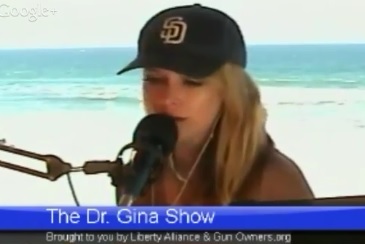
Lyda Loudon of Tea Party Youth and Jenny Beth Martin of Tea Party Patriots discuss the proposed Constitutional amendment on the Dr. Gina Show

April 22nd, 2012 | By jbrowning

Below is the audio of the interview with Jenny Beth Martin, co-founder of Tea Party Patriots where she and Lyda Loudon of Tea Party Youth discuss the proposed amendment to the Constitution to keep the government from taxing future generations.

Follow Jenny Beth Martin and Lyda Loudon on Twitter at www.twitter.com/jennybethm and www.twitter.com/lydaloudon
Also, Tea Party Youth can be found online at TeaPartyYouth.org

Share

Dr. Gina on the Rick Amato Show on KCBQ San Diego talking about the AL Dem Party Bill Maher Event

March 15th, 2012 | By jbrowning

Click the link below to listen to the segment of Amato Talk on KCBQ in San Diego where Dr. Gina lists the reasons why she thinks the Alabama Democrat Party should cancel their fundraiser with Bill Maher…

03-15-12 AmatoTalk on KCBQ San Diego with Dr Gina Loudon – Bill Maher in Alabama

Share

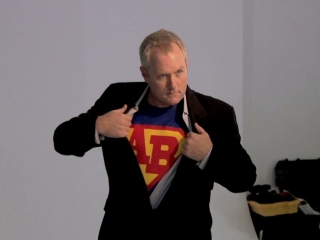
Our Tribute to Andrew Breitbart

March 1st, 2012 | By jbrowning

This column by Dr. Gina is cross posted from Townhall.com
http://townhall.com/columnists/ginaloudon/2012/03/02/the_andrew_i_knew

The Andrew I Knew
- Gina Loudon Ph.D.

Everyone who knows him struggles to define him.

Andrew Breitbart died this morning, and leaves behind a beautiful wife, and four young children. He died (as so many of the great ones do), way before his time.  He could aptly be called a revolutionary, a radical, a giant among men, a warrior.  But to those of us he took the time to mentor, the word “teacher” (however un-sexy the word) might be the best description.

I have had a lot of teachers in my time.  And while it is important to learn to read and write and dissect frogs, I think no one ever taught me the life lessons that Andrew taught.

We met at the birth of the Tea Party when we both spoke at one of the first Tea Party rallies.   This thing we were calling a “Tea Party” had zero credibility, and none of us knew how much we would fight, how much we would sacrifice, or how much we would change the complexion of politics.  Andrew knew.  There was the fierce determination in every fiber of his being.  He was the general leading us to war, whether we were willing or not.

Many warriors fell. Many warriors were born that day.  Many of us unwitting, but all of us watching his cues as to where the next battle would be fought.

He made a promo for my show that called me his “long time friend, and co-troublemaker.”  He was the first to publish my work, and he was the first to text me for a battle well-fought.  We shared a birthday week, and he made sure I knew he remembered and felt celebrated.  But none of that means as much as the wages of war he taught me, and the courage he engendered in my soul.  I think all who knew him feel that way.

He took time to mentor my daughter as she struggled to launch the first national “Tea Party Youth” movement.  He always took her calls, he always moved away from reporters to greet her and discuss her ideas in concerns.  Her text to me this morning (as I am out of town) read, “Mama, IDK what to say.  Can’t even look at the news because I don’t wanna hear anyone talk about it…”.  She feels without ballast.  We all do.

Larry Solov, one of Andrew’s best friends and most trusted colleagues said it well, “Andrew lived boldly, so that we more timid souls would dare to live freely and fully, and fight for the fragile liberty he showed us how to love.”

Andrew would not want us to blink.  He would demand our resolve.  Our tributes should not be in the form of words, and tears, but rather in our resolve to fight on!  Let’s resolve to live as boldly as he did:  “I love fighting back, I love finding allies, and—famously—I enjoy making enemies.”  We should all endeavor to go so boldly and live so fearlessly.  That will be the patriot’s tribute to this amazing leader, who will be so missed.

Share

This Week on The Dr. Gina Show

January 2nd, 2012 | By Gina Loudon

Happy New Year!  Dr. Gina announces her decision on who she will support for POTUS.  LIVE reports from Iowa.  News about the New Hampshire Primaries (The Dr. Gina team will be there, reporting LIVE, thanks to the good people at Hoover Tactical Firearms).  Neil King from Wall Street Journal.  Penny Nance of Concerned Women for America. Amy Kremer from Tea Party Express.  Anita Gunn from inside Hollywood and Fingers Malloy for some comic relief after a crazy week. Tune in to the smartest audience in radio–The Dr. Gina show from 4-7 PM Drive on www.101WYDE.com and www.truthtalk630.com!  For more information on Dr. Gina’s show in your state, go to www.GoVote.com

Share

On The Dr. Gina Show this week…

December 11th, 2011 | By Gina Loudon

THIS WEEK ON THE DR. GINA SHOW:

I’ve been teasing it for weeks, and finally it is time for the big reveal…

GoVote.com is the latest, greatest one stop shopping place for all things political, from the State House, to the White House.  User friendly and growing by leaps and bounds, you can voice your opinion to leaders, media, electeds, and candidates in a matter of seconds, all in one place!

Friday, we will have our own little “Debate after the Debate” on The Dr. Gina show, featuring Ron Christie, National Republican Editor, and Jamal Simmons, National Democratic Editor, head to head.  Don’t miss this one!

As always, we endeavor to be listener responsive to you, the smartest audience in radio!  Your calls are always welcome, at 866-551-9933 OR you can chat along with me live from 4-7 on  Twitter.com/drginaloudon/ or on Facebook.com/Dr. Gina/.

Never fear… more exciting announcements on the show this week.  But you have to listen to be in the know!  

Thanks for listening to The Dr. Gina show.

Go boldly now, and live the Truth!


Share

Fingers Malloy on The Dr. Gina Show

December 11th, 2011 | By Gina Loudon

Click on this link for Fingers Malloy’s interview on The Dr. Gina Show!

Share

My Latest Big Government Post on Rep. Bachus

November 16th, 2011 | By Gina Loudon

This is cross posted from its original publication, Andrew Breitbart’s Big Government

Local Reaction to Congressman Spencer Bachus: Respond, Reform, or Resign

by    Dr. Gina Loudon   

There  is a forgiving nature in the Southerner that surprises the
occasional  Yankee visitor. Doors are opened, ladies are escorted off of
curbs, and  conversation is edifying. There is a sharp but tailored
critique of  wrongdoing, and forgiveness comes as easy as the gentle
southern gulf  breeze—but only once. Part of the charm of the south is
the genteel way  they approach human interaction–until, that is, you
cross them. Expect decisive correction. I have come to know that this is
how the  south “weeds” out its own bad, so that the genteel southern
tradition  continues.

The southern tradition of civility is deeply rooted. That is why the short selling of the American economy by Alabama Congressman Bachus, as described on 60 Minutes
last Sunday, and his pursuant refusal to explain, apologize, or make
reparations to his constituents strikes them as so abhorrent. Alabamians
are asking for the honorable removal of the Congressman who did the
dishonorable.

The following is a letter sent Monday to his office, after one sent Sunday evening went unanswered:

Mr. Staley:

This is my second attempt at communication to you and your Congressman’s office.

I  am looking to give you and/or Congressman Bachus an opportunity to
speak in his defense to his constituents before they organize an all
out protest of his non-response on what appears to be a horrible
injustice against the citizens of Alabama, and the American economy.  He
is welcome on my show today any time between 4 and 7 pm.

I  will be diplomatic to my guests, Mr. Staley, but non-response from
an  elected public servant and his staff is wholly unacceptable and
will  result in a relentless pursuit of the same.

I am not only an engaged Republican, Tea Partier, and show host, I am his constituent.

Please respond to my Producer, Jason (cc’d), ASAP.

Thank you,

Dr. Gina Loudon

The congressman’s office sent a written statement in response to the interview request as follows (edited for brevity):

…Congressman Bachus is not available for an interview for the show, but we did want to send along the statement given to 60 Minutes and to others in the media who have asked about this.

Congressman  Bachus makes sure to comply with the law and House
Ethics rules, and  his financial transactions are publicly disclosed.
Chairman Bachus does  not trade in financial sector companies over which
the Financial  Services Committee has jurisdiction.

Tim Johnson

Press Secretary

Rep. Spencer Bachus (AL-6)

The  office offered nothing in terms of a personal apology,
restoration to  American taxpayers, commitment to reform, or other
“non-canned” answers  for his constituents. A follow up letter with
suggestions as to the  former is drafted, and the Congressman’s response
will be reported here,  as well.

Local  Alabama reaction has been starkly consistent in terms of a
call for him  to respond, or in some way even acknowledge that his
voters are angry.   Michael Hart, Talk Show Host on popular FM station WYDE said:

While investing in a company a Congressmen maintains
oversight  on is not illegal, the practice does raise several serious
issues… since  US Congress members are briefed by their staffs on most
issues they vote  on, these staffers are often privy to the same
information… they… are not  forbidden from taking advantage of this
information. Each new person  added to this ‘group of insiders’ becomes
another potential conduit for  sensitive information to leak out and
could even encourage lobbying of  Congressional Staffers by investors
seeking to exploit what they know.

Another  potential problem is the possibility that a
Congressman may be  motivated to vote on policy or regulations that
might not best serve the  interest of the country or his constituents if
there is a direct  financial benefit for voting another way.

Local Tea Party activists are already planning a protest of his office this week to ask for his response to the accusations.

Zan Green, President of the largest Tea Party
in Congressman Bachus’ district said, “while not illegal… according to
the Congressional Standards (specifically), this practice shows how far
DC has gone from being a place that works for the US citizens and the
Country as a whole, to a place to enrich one’s self.”

Andrew Breitbart has called for the Congressman’s resignation, as has Investor’s Business Daily,
and others including myself  (if Bachus doesn’t acknowledge his
constituents).  Alabamians are willing to clean house when it comes to
corruption, and most are focused on restoring the credibility of
conservatives after they perceive that some have used their offices
inappropriately and dishonored conservatives as a whole. The title given
Congressmen is “honorable.” Alabamians expect the “honorable” to act
honorably.

He needs to:

1. Admit it was wrong (even if not technically illegal), and/or

2. Send the money to charity, or the American taxpayers, and/or

3. Step down from the Financial Services Committee, and/or

4. Commit to real ethics reform.

The reality is that no one truly expects this Congressman to do the right thing.  Listeners to The Dr. Gina show
described a town hall meeting where people were asking some tough
questions and Bachus angrily stomped off stage, saying, “I don’t need
this.”  I am told this happened more than once. The question then
becomes if he refuses to answer to his district and the country as a
whole, what happens next?

The  Congressman has no choice but to resign or face a constant
firestorm from  Tea Party and other GOP activists who are working hard
on self-policing  the standards of behavior for their membership as they
look ahead to  the 2012 elections.  And if this Congressman has seen
the tenacity of  those in the Tea Party who believe they are fighting
for the life of  this country, he would be wise to respond.

Share

Why Are Most Artists Liberal?

January 10th, 2011 | By admin

As seen on Big Hollywood

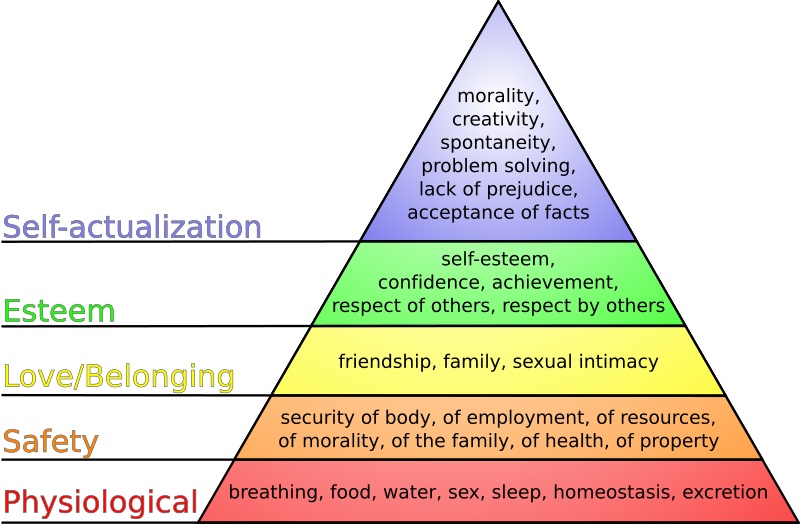
Reality demonstrates that people act on their basest needs. Maslow’s Hierarchy of Needs says that basic needs are things like food, shelter, safety, and security. If one progresses up the scale, needs like love, belonging, esteem, and respect become important.

Hollywood is a competitive place to live and work. People who live and work there know that it might be the most competitive place to live in the entire world. The drive to succeed, to find an edge that propels you to the next level can be very compelling for those who are weak. Of those who crave the sort of attention that might compel them into the snake pit that is Hollywood, psychologists could agree that components in Maslow’s Hierarchy of Needs are lacking in key areas such as confidence, friendship, and even morality. All of these mid-level needs should be met for healthy development of creativity, intellect, problem solving, and other high-level needs. Maslow might reason that in the desperate setting of Hollywood, the underdevelopment of needs like morality, confidence, respect of self and from others might lead to the malformative finding of one’s self at the top of the triangle, with many of the more basic needs still lacking. In Abraham Maslow’s terms, this is a recipe for disaster of philosophical incorporation.

Other factors contribute to misintegration of philosophical synthesis, as well.

Artists are often dependent on state funding. This may elicit a reactionary response whereby an artist who might otherwise be conservative is immediately comfortable with the idea of government finance and control in order to meet her basic needs as enumerated in the physiological component of Maslow’s needs (food, water, sex, sleep, survival).

Artists know that success is often found in pushing boundaries. Art is usually only cutting edge once, and genres tend to have a shelf life. There is only one O’Keefe, only one Eastwood, only one Bach. Those genres, recomposed for today, would not have the impact because they already did. The easiest way to create a niche is to push a boundary (for example, Ke$ha, Katie Perry, Madonna). Preserving tradition often results in preserving the status quo, and taking that to a level of marketable creativity is only for the artistic genius (It’s a Wonderful Life; The Passion; The Blind Side; Amazing Grace). The reality is that not all artists are geniuses. Therefore, they will be tempted to crutch on breaking norms to accomplish notoriety, rather than rely on genius they don’t have, or hope to have.

Erich Fromm said, “If I am what I have, and I lose what I have, who am I?” His ominous warning told a tale of the reality of someone who does not properly and systematically actualize.

Creativity is usually born of deep emotional angst. In order to tap into the deepest of creative ability, it is often necessary to dwell on emotions others have the convenience of glossing over. We are all sad when we experience the death of a pet. The creator of King Kong had to not only experience the death of an animal, he had to think of every complexity, and focus in depth on the emotional trauma in order to invite his audience to experience it on film. While we all at some point are witness to the death of an animal, the writers and producers of King Kong had to delve into every painful portion of those experiences, contemplate it, ruminate on it, and experiment with it in order to assure that his audience would live the most compelling parts of that loss in the movie. The result of all this is that the artist dwells in the realm of emotion. While all of us experience emotion, the rest of us have the luxury of moving on. Not the artist. He has to dissect it, magnify it, and live it for months on end. Then, like some cruel joke, the artist is often rewarded for his attention to detail in describing for all of us the precise most painful components of pain, loss, grief, insecurity, and other emotional parts. Thus, the artist is conditioned in a Pavlovian way to act based on emotion. It would seem natural that he would then transpose that action on other elements of his life, including his marriage, his friendships, and his politics.

Artists are not paid for tapping into the power of rationale, but rather, the power of emotion. Therefore, they have no real reason to exercise or even acknowledge the rational argument of a situation. Much of art is fantasy to begin with, for example, one would not appreciate the movie King Kong if the artist explained how a giant gorilla couldn’t really do what his movie depicted. The Harry Potter films would flop, Poe would be a side note, Monet would have sunk right into his pond, and the Twilight would be bankrupt. When an artist takes a look at how to “fix” a social or economic problem, it shouldn’t surprise us that they are looking for heroes and villains, for victims and perpetrators, and for bigger than life fantasies that aren’t based in reality (and therefore won’t work).

Artists are not trained to delve into the gray. They are trained to define the absolutes such as living, dying, good, bad, heaven, and hell in ways that most of us never really have to face. Therefore, when it comes time for an artist to consider possibilities, and rational conclusion in areas like politics that they don’t know, their mind immediately goes to the dramatic—the victim, the hero; the winner, the loser; the angel, the demon.

To further complicate matters, man has an innate need for God, or religion. Conservatives argue that such needs are God breathed, but liberals have to try to push those needs aside. Artists, who tend to be deeply emotional, sociologically less adept, and psychologically needier than the basic population, arguably have a deeper need for God than any other professional population. Liberalism, in it’s cult-like compulsion toward legalistically defined behavior as dictated by leaders (bankers, producers, dealers, funders) in Hollywood, and one that provides a sort of moral promise of victory, can be very alluring. This allure meets the higher level Maslovian esteem needs that the artist may not be prepared for if he has not met the lower level needs, as he has not in many cases. Thus, liberalism becomes a pseudo religion whereby answers to other unmet Maslovian needs promise to be met somehow; some way. As the expectation continues to exceed the outcome, the artist may grow weary of their religion of “Liberalism,” and make the switch! This may explain why many artists become conservatives

This predisposition toward emotionality and validation would make the most sound minded, conservative-leaning artist somewhat reactionary. The combination of gratification for emotional response to stimulus, and the fact that most artists deal in a fictional depiction of absolutes would naturally lead to a skewed perception of how people really work. Artists are not rewarded for reality. They are rewarded most often for their dramatic, condensed representation of what reality could be.

So the question becomes then—why do artists feel compelled or qualified to delve into the political when they have no training for it at all, and even their life experience lacks credentials necessary to relate to real Americans who don’t live in Hollywood? Should they not simply exclude themselves, much like a judge does when she knows she has conflicting experience that might impede her rational judgment in a case? Well, no, because we believe in freedom under the US Constitution—even under the knowledge that freedom could result in loss of liberties for having them.

In Frontpagemag.com, John J. Ray has a theory about fame and ego that is too good to paraphrase:

My basic proposal, then, is that most (but not all) Leftists/liberals are motivated by strong ego needs — needs for power, attention, praise and fame. And in the USA and other developed countries they satisfy this need by advocating large changes in the society around them — thus drawing attention to themselves and hopefully causing themselves to be seen as wise, innovative, caring etc. Rightists by contrast have no need either for change or its opposite and may oppose change if they see it as destructive or favour change if they see it as constructive.

We will see below why one of the most consistent themes to emerge from the Leftist’s love of change is the claimed need for “equality”. And the belief in “equality” also tends to lead to support for such things as redistribution of wealth generally, heavily “progressive” income taxes, inheritance taxes, foreign aid, feminism, gay rights and socialized medicine. Again for reasons explored below, Leftists also tend to oppose religion and the churches and this in turn tends to mean that they favour abortion and oppose or obstruct religious schooling in various ways. So let us now briefly look at some of these characteristic Leftist/liberal themes to see how they relate to basic Leftist motives.

And he concludes:

But in all cases, bitter experience has shown that Leftists in power are very dangerous and destructive people. Where their power is effectively unchecked, they generally seem to resort sooner or later to mass murder (as in the case of the French revolutionaries, Lenin, Stalin, Hitler, Mao, Pol Pot, Jim Jones and many Communist regimes and movements worldwide) and where they are partially thwarted by strong democratic traditions and institutions, they at least bring about large-scale impoverishment (as in post-independence India and pre-Thatcher Britain).

All people including artists want to believe that their work is meaningful and significant. For artists, this propels their belief that human nature is changeable with proper “education” which thereby gives credence to their work. Thus, to believe in their own meaningful output of work product, they must fancy themselves “educators” capable of changing people in important ways.

If you believe, as I do, and as John J. Ray does, that liberalism is inherently destructive and conservatism, while imperfect, is the far better alternative, then you need to know that my psychological training perceives hope on the horizon, because of the current liberal artists’ dilemma: the liberal artist is marketing today to a glowingly conservative consumer. Conservatives are crying out for family oriented, morally compelling, traditional values that once graced the silver screen and our television sets. The heart of America is sentimental for a turn back to the roots of Hollywood. If the market is demanding enough, it just might result in the artists resorting to Maslow’s Hierarchy to make a living to meet their basic needs, and that might look a lot like the recent mid term elections when we just threw the bastards out and changed the course of history.

Bravo, Hollywood. The best is yet to come.

Share

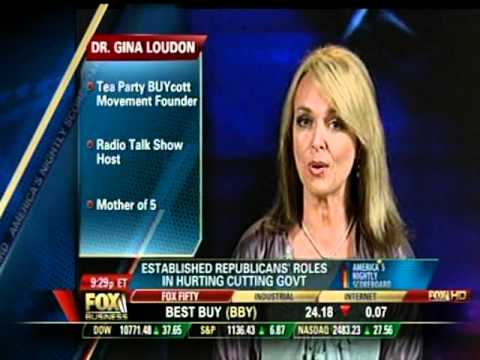
Dr. Gina on Neil Cavuto

January 8th, 2011 | By admin

Will Republicans Waiver on Debt Ceiling?

Share